Reflections on the Woodshed Year

Well, it’s Advent, beginning of another liturgical year, and the end of my so-called “woodshed year.” I published nothing save for a poem sent out ages ago and forgotten. Instead, I spent the year huddled with a notebook, writing everything by hand, trying to write from my body. Trying to let go of grad school, searching for a new way of writing and speaking, a way that is earthier and more honest, more feminine perhaps.

Did I find it? I don’t know. I think I might be on its trail, though. For so much of the year I was laid up with an inexplicable knee injury, followed by a cancer scare. I suffered choking anxiety and severe depression. It seemed like nothing was happening. Certainly nothing good.

But through it all, I wrote. Mostly, what I wrote were prayers, because I was desperate AF. I re-read the Biblical psalms and the prophets. I began to think of poetry and prayer as made of the same stuff, and imagined the words curling up to God like incense smoke, or chanted like incantations.

I read Betty Friedan and Ram Dass and The Argonauts. I spent a lot of time grappling with the concept of gender. I lifted God’s beard from his face.

And then I tore it off.

Still, it seemed like nothing was happening. From the outside, it just looked like I was sitting in a chair, crying a lot. I skipped church most Sundays because I just couldn’t stand there crossing myself and exchanging the peace when I had no peace to exchange.

But looking back, I can see things were shifting. I’ve been accepted to study with John Fox at the Institute of Poetic Medicine starting January 2020. I’ve written hundreds of poems, lots of them crappy but some of them good. And I’ve been named the inaugural Poet in Residence for St. Mark’s.  All small things in the grand scheme, but movement nevertheless. I can sense a shift in the trajectory of my writing, and possibly my life.

Oh-Thank-God-I’m-Alive Day

Fourteen years ago today I almost died.

I’d been living in New Orleans one month. One night after getting off work at the French Quarter restaurant where I waited tables, I decided to walk to one of New Orlean’s famously-creepy above-ground cemeteries. I wanted to make chalk rubbings of the crypts on some butcher paper I’d taken from the restaurant. It was about eleven o’clock.

I know what you’re thinking: and yes, I was an idiot. I don’t remember why I thought this particular activity would be a good idea, or fun, or why I wanted to do it at night. I should have known better—and so should have the friend who accompanied me. He’d lived in New Orleans a long time.

But like I said, I’d been there for one month; I’d known the guy for even less time. Later, I would come to realize that good judgment wasn’t really his thing.

Anyway, on the evening of May 12, 2005, we found ourselves on the wrong side of Canal Street with a roll of butcher paper. As we moved further into the dark neighborhood, I noticed two figures approaching. Their stride was tense, purposeful. Something inside me said to turn and run, to at least cross the street, but I didn’t listen to my intuition.

When the men got closer, I tried to step aside to make room on the sidewalk, but they split and moved around the outside of us, like a pair of wolves. At the same time, they bumped our shoulders, hard. I turned to offer an apology, and when I looked up, I was staring down the barrel of a gun.

“Gimme your bag,” the guy said. I handed it over, tucking my face into my shoulder. I wanted him to see me not looking at him, not giving him any reason to pull the trigger. I saw my friend behind him, silhouetted by a streetlamp. He was kneeling on the sidewalk with a gun to his head.

I thought about my mom. Six weeks earlier she’d flown out to Phoenix to drive halfway across the country with me in my beater Honda without air conditioning and my yowling, miserable cat. All that trouble, and I was going to die for a night’s tips.

“Get on the ground, face-down,” the guy told me. I did as he said, and he patted me down, rifling my pockets and fondling my ass, and going Mmm. My stomach puckered and shrank inside me like a slug in salt. I had no idea what was happening to my friend. I hoped he wouldn’t do anything stupid.

“Get up and don’t stop running,” the gun-guy said. We did. As soon as we could, we turned down a side street. When was it okay to stop running? I wondered. Should I run the whole way home?

At Canal Street we stopped, clutching our knees and gasping for breath. “We have to call the cops!” I told my friend.

“What for?” he said. “They won’t do shit.”

I wasn’t interested in this perspective. I’d just been robbed at gunpoint; the police should be informed. I was insistent on this point.

“Do what you want,” my friend said, shrugging.

I called the police. A few minutes later a squad car met us. The cop got out looking annoyed, like we’d woken him from a nap. After he took our statement, he asked what we wanted him to do about it.

I couldn’t believe it. “Look for the bad guys or something.” I said. He nodded, assuring us he would do that, and drove away.

I told my friend to fuck off, and went home.

Only I couldn’t stay in my apartment, I was too amped up on adrenaline. In fact, I didn’t sleep for the next thirty-six hours. I needed to be with people but it was the middle of the night, in a new city. I had exactly two friends, including the one I’d just told to fuck off. The other one was probably asleep.

The obvious choice was to go to an all-night diner. Oh-Thank-God-I’m-Alive Day was born. For me, it’s a high holy day.

I ordered bacon. I ordered a stack of chocolate-chip pancakes and drenched them in butter and syrup. I ordered an omelet and two Dixie beers, one for each trembling hand—because eating and drinking is what alive people do. “I just got robbed at gunpoint,” I explained to the waitress. She nodded solemnly, and I felt as though I’d passed through some kind of bizarre New Orleans hazing. I’m one of them now, I thought. I lived to tell the tale.

I don’t know why I lived. Maybe it was luck. Maybe the guns weren’t real. Maybe they never intended to shoot us. Maybe the Great Whatchamacalit was looking out for me, or maybe it was because I didn’t look the guy in the face. (Later, this would mean I could not pick him from a photo lineup when the police caught a suspect.)

I’ll never know. But I am glad I didn’t die, and I’m grateful to whatever saved me. So every year on May 12, I celebrate. Cheers. Here’s to living to tell our tales. And happy Mother’s Day to my mom, who didn’t hear this story for a long time after it had happened.

The Day I Married New Orleans

Thirteen years ago today, I married the city of New Orleans.

I’d moved there the day before, with nothing but some boxes full of books, and a white Mexican-style dress embroidered with red flowers, purchased for this particular occasion. I didn’t know a soul in town, but I knew the soul of New Orleans—or thought I did—well enough to pledge my eternal and undying love.

cathedraleditI stood on the wooden steps leading down into the Mississippi River, the candy-colored French Quarter at my back, overcome by all it had taken to get here: extricating myself from some bullshit in Phoenix, driving across the sunblasted southwest in a beater car without AC. Explaining to my parents that no, I was not home to stay; I was on my way to New Orleans. No, I didn’t have a place to live or a job—I’d figure it out when I arrived.
A handful of other people lounged on the dock: a lanky man drinking a tallboy, a couple of tourists photographing the St. Louis Cathedral behind us—these were the unwitting witnesses of my wedding. I could feel them giving me side-eye as I removed the battered silver ring I’d been wearing as an engagement ring, purchased in New Orleans the year before. I threw the ring into the river, and whispering my vows, replaced it with another ring purchased earlier that afternoon.

It was an unorthodox ceremony to be sure, peculiar and solemn as the girl I was then. I loved New Orleans the way you love a person: passionately, even obsessively. I wanted to gather New Orleans into my arms and kiss her. I wanted to whisper sweet-nothings in her ear. Obviously, this presented some complications. The best I could do was to devour a plate of etoufee, which is what I did next. I asked the waiter to seat me next to a window, so I could gaze at my city.

As with any marriage, the first months were a roller coaster. Delirious highs followed abysmal lows. I was the poorest I’d ever been—at one point things were so bad that I shared a can of potted meat with my cat. But I was also rich: I had my own apartment, an odd conjunction of small rooms that had probably once been servants’ quarters. And I had my own life, at last. I came and went as I pleased; I slept and woke accordingly. I bought a set of plastic plates shaped like flowers, and a coffee mug painted like a flamingo. For the first time in my life, I was free to be myself, free to discover who that was.

New Orleans was all around me all the time. She was there when I got out of bed in the morning, sun shining through the dirty windows. She sat on my balcony with me, sharing a cup of milky coffee and a cigarette. She sent me evening love notes on the breeze as bits of song, tootled forlornly by a clarinetist somewhere on my block. For supper, we ate boiled corn and potatoes, $1.50 for a whole sack. We drank Dixie beer. We walked shoeless through dirty puddles after a rainstorm. And when I got held up at gunpoint, she saved my life.

I thought I would live with her forever, but Hurricane Katrina, that conniving bitch, had other plans. Like so many, I was too poor to go back when there were no places to live and no jobs to go back to. By the time the city was on her feet again, I’d married a real person.

But once loved, a thing can never be un-loved, not completely. I don’t have that kind of heart. Just like my flower-shaped plates and my flamingo mug, I left part of myself there when I evacuated. And every time I go back, my heart thumps dangerously in my chest. To be back with her! Her hot breath putting a shine on my face, smelling her smells: beignets and beer and dumpsters and river water and magnolia blossoms big as pie tins. Hearts love what they love, no matter how little sense it makes.

Happy anniversary, New Orleans. I’ll always love you. Maybe one day I’ll come home for good.

2010 New Orleans 047

Parties are Lame and So am I

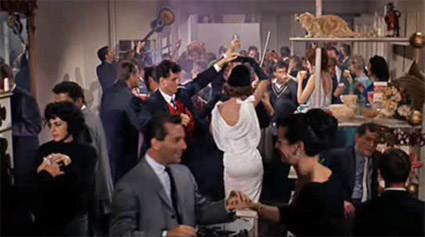
A conspiracy exists and it goes like this: Parties are Fun! I keep falling for it. And then I go to a party, and I remember: Parties suck. I tell myself this is because other people do not know how to throw a good party. In my mind, a good party looks like Holly Golightly’s party in BATBreakfast at Tiffany’s. There are interesting guests wearing fabulous outfits, and someone’s hair catches on fire but it’s no big deal.


Alternatively, I picture some kind of hippie-fairytale-lovefest where people dance barefoot under string lights and pass the peace pipe while a woman with waist-length chestnut hair plays guitar.

But I can’t blame other hosts; none of my parties look like this either. My parties are like everyone else’s: people sit on the couch and talk about stuff. Usually boring stuff. There are chips and mediocre wine. No one smokes anymore so no one’s hair catches on fire.

couch
Is this fun? Sure, if you’re by yourself. Not if you’re at a party.

The best party I ever threw was a Mardi Gras party. Someone broke a chair by sitting in it. I considered this a great triumph. Later, the party even devolved into people playing folk songs on a guitar. Where had the guitar come from? It was a minor party miracle. I should have also considered this a great triumph, but by then it was two o’clock in the morning and I wanted everyone to go home.

At a recent Christmas party (hosted by someone else), I was loitering awkwardly by he chips until I saw another woman tucked into the corner of the sofa, actively avoiding the goings-on by looking at her phone. Aha! I thought. A kindred spirit! I sat down beside her.

“Hi,” I said. I was really going out on a limb here, trying to have a good time.

“Hi,” she said. She did not look up from her phone.

Feeling that forthrightness and even a bit of vulnerability were in order, I summoned my inner Brené Brown and said, “Do you feel awkward at these things?”

“No.” She did not look up. “I’ve been to enough of them to know what to expect.”

Clearly, the woman was some kind of party Zen-master. She’d relinquished all her illusions about the inherent nature of parties. I was out of my league.

“Um,” I said, floundering. A long time passed. Maybe four or five years. Finally the woman remembered I was there and that she should be polite. “Why do you feel awkward?” she asked.

“I dunno,” I mumbled, trying to remember why I’d started talking. “I guess I just do?” The woman was silent, still scrolling. “Okay,” I announced (unnecessarily). “I’m going to get a refill.”

I did not need a refill.

Everyone else seemed to be having a good time. They were talking to each other. Some of them were even laughing. I thought: What the fuck is wrong with me?

Perhaps it’s simply an issue of expectation. So many things in life have turned out lame that I thought would be unbelievably awesome. Grad school. Driving a car. Having my own mailbox.

Accepting that parties inherently suck once you exceed ten years of age is one of the hardest truths of adulthood. I still struggle with it. That’s why, at your next party, I will be the weirdo huddled in your laundry room with the cat and a creepy smile on my face. Don’t be scared—I’m only trying to make my face look fun. Have mercy on me, refill my wine, and shut the door.

The Ho-Hum Christmas Blues

When I was a kid, I loved Christmas. LOVED it. Most kids do, I guess — all the twinkling lights, the extra cookies, the break from school. The presents.

Especially the presents.

But I loved Christmas music, too. When I was ten, I embarrassed myself by belting out Christmas carols in the shower at summer camp. The acoustics, as I remember, were spectacular. I didn’t realize that singing O Holy Night in mid-July was odd at best, and annoying at worst. To me, it was a beautiful song, about a beautiful event, and it moved me. The feeling I got from singing that song couldn’t be constrained by seasons…could it?

When I finished my shower concert, I realized the whole dormitory was laughing. Somebody called me an elf. In the cafeteria, at the pool, I was singled out as the Girl Who Sings Christmas Carols in the Shower. I was pretty jazzed about this new identity, and  continued to treat my fellow campers to my vocal stylings, for the remainder of my stay.

I mean, who doesn’t like Christmas?

A lot of people, actually. I wouldn’t have understood it at ten, that particular December malaise that falls like a musty blanket over the hearts of otherwise-content people. I hardly understand it now, decades later.

Perhaps it’s the idea of spending as much on Christmas presents as I spend on my mortgage.

Or maybe it’s the expectation of extreme good cheer, the notion that now, more than any other time, we’re supposed to feel all snuggly about mankind. It’s a lot of pressure, after all. Not to mention the fact that mankind has been particularly unattractive lately.


Don’t get me wrong. Every year I put up a Christmas tree and string my house with lights. I make cookies (or buy them from the supermarket), I send out Christmas cards and donate to charities and purchase gifts for the people I love. But this is my dirty little secret: I’m just going through the motions, waiting for the magical Christmas feeling that never comes. I’d like to be all starry-eyed and full of wonder like I was at ten. But something’s missing and it has been for a long time. It’s not exactly bah-humbug territory, this land where I’m living, but it shares a border.

At this time of year especially, I miss belonging to a church community. I miss the sense of shared ritual, of a meaning that runs deeper than the slot in a credit-card machine. From time to time, I consider going to a service. But then I remember a certain scorn cherished by the never-miss-a-Sunday adults of my childhood, a scorn reserved for people who attended only at Christmas and Easter. Bi-annual Christians, that’s what such people were called, and they were to be pitied for their poverty of spirit.

The thing is, I like not going to church. I like waking up on Sunday morning and sharing an endless pot of coffee with my husband. I like lying around in my pajamas until noon. I like to spend hours curled in a chair with my nose in a book, to go for a walk or dig in my garden. Church, to me, has always been antithetical to the whole day-of-rest concept. There’s nothing — NOTHING — relaxing about pantyhose.

Nevertheless, I miss church this time of year. I don’t want to feel blasé about Christmas.

With all the distractions — the things we know Christmas isn’t, but easily forget  — I want to have my focus realigned with a sense of mystery and wonder. I want to marvel that I am here at all, that I’m not hungry or cold or sick, that every day is filled with opportunities for kindness. I want to feel my blessings more keenly. Most of all, I long to return to a sacred space inside myself — a chapel of the soul, where awe unfolds as naturally as a blossom.

This is what I want for Christmas — this thing that money cannot and never could buy. I want to sing again, to lift my voice for the pure pleasure of doing it — now, and in July.

In Which I Meditate Upon Trees and Grasp at Hopefulness in Spite of the Impending Election and My Own Personal Problems

Yesterday my husband and I planted a tree. It seemed like a hopeful thing to do in these uncertain and disheartening times.

I felt all spiritual about it, I won’t lie. I am a person who hugs trees. I’ve hugged them on hiking trails and in my own backyard. As a human, there’s little else I can do to express my fondness for them. But I also hug them for my own sake. There’s something reassuring about pressing your soft body against a tree’s rough, unyielding trunk. You can feel the life simmering beneath its bark. You can feel the life of all the insects and birds and mammals that call a tree their home. A tree is a kind of world.Continue reading “In Which I Meditate Upon Trees and Grasp at Hopefulness in Spite of the Impending Election and My Own Personal Problems”

Our Name is Legion: Or, Sympathy for the Devil

It’s natural—perhaps even biologically sound—to shun the afflicted. In this way, we’re no different than other animals who practice this form of social hygiene. We fear infection from illness, and the disruption that comes with psychological instabilities. Our limited reserves of personal energy — our limited time — is precious.

Moreover, we balk at hopelessness. Most of us are unable to simply bear witness to another person’s despair; we are action-oriented, we want solutions. Our culture in particular is obsessed happiness. A flourishing industry of books and motivational speakers insists that such a thing is sustainable. If you are lonely or angry or crazy — or just living what Thoreau called “a life of quiet desperation,” solutions abound: perform an act of service! Get a pedicure! Clean something! If one method fails, try something else.

God help you if you don’t keep trying.

Consider how easily we excommunicate from our cult of hope the willfully self-destructive.The addicts. Those who won’t take their medications. Those we deem “toxic.” The Biblical story of Legion is a beautiful, terrible example of this human tendency, and how far back it goes.

I can’t remember a time when I didn’t know this story. But re-reading it recently, I was struck by its poetry. A man living among the tombs, either banished or waiting to die. The story  refers to the chains he’s smashed; Legion could not be controlled; “… neither could any man tame him,” the scriptures say. “And always, night and day, he was in the mountains, and in the tombs, crying, and cutting himself with stones.

The story of Legion awed me as a child. He was like a comic book villain, terrorizing a village, bursting his chains with superhuman strength. As an adult, I see Legion differently: a fugue of mental illness. No one what knows what to do with him. He doesn’t know what to do with himself. Crying and opening his flesh lets out the confusion and darkness within him. Blood is easy to understand. It explains something beyond words to anyone brave enough to look. It explains him to God. It explains him to himself.

Is there anyone in the Bible more wretched? If Legion were alive today, he’d be in an institution, sitting in a wheelchair, drooling on his pajama shirt. Or he’d be on the street, ragged, smelling of urine, haranguing passersby over imagined insults. Unloved at best, Legion’s horizon is without any hope beyond death.

Then Jesus comes and speaks to him. Asks his name. Respects his requests.

The “demons” entreaty that they not be sent “out of the country” could be merely practical. If we are to believe that the man himself is speaking, he likely understands that if sent into the neighboring lands, he will presumably be treated with even less tolerance. A more esoteric reading of this request — as one made by actual demons — begs the question: why ask not to be sent away, only to be released moments later from the bodies of the pigs? Are they itinerant devils, assigned to wreak havoc among the Gadarenes? Or do they fear Christ banishing them from the Kingdom of God—His creation—effectively ending their participation in it?

Why, above all, does Christ respect the wishes of a devil? By granting the wishes of these “evil spirits” he is colluding with them to increase the suffering they bring, making it even more widespread. Two thousand pigs could very well represent the livelihood of all or most farmers in the village. The economic ramifications would have been quite serious. The villagers respond with fear and outrage, never mind that one of their own has been restored to them. For the first time, Legion’s destruction has touched their lives, and their anguish is manifold.

This, I think, was Jesus’ point: there is no such thing as individual suffering.

Because we are temporal beings, we tend to understand ourselves individually rather than corporately. When in pain, we believe our pain is unique. Like wounded animals, we withdraw, ashamed or unable to endure others’ feeble ministrations. When we are not in pain, we shake our heads at the suffering of others. We try to defend ourselves from it by making it disappear, by calling it bad luck or a punishment for poor choices — choices that we are too wise to make.

But joy and suffering are the weather of the soul. The winds that scour give us shape;  searing droughts make us grateful for rain. Floods destroy the temples we’ve built within ourselves, tearing what is precious from our hands, leaving a plain of silt.

It seems blasphemous to suggest that there was value in the work of those demons. It feels like a dangerous temptation of fate. Certainly, it’s nothing you’d say to someone in the throes of heartache: This has purpose, this is for your own good. Still, I can’t help thinking of another man who ran to Jesus, the “Rich Young Ruler.” How self-satisfied he was, how his unwillingness to relinquish stalled his spiritual progress. As awful as Legion’s story is, it has a brighter outcome.

Only to the empty-handed can anything be given. Such was the position in which the man from the tombs found himself: without a name, without a home, without a word in his mouth. On his knees before Christ, awaiting what would come.

Christmas Reflections

I’ve had a hard time getting into Christmas this year. The whole routine seems like the same thing over and over again: lights, presents, songs, candy. Giving money to charity and never knowing whether or not it makes a difference. I’ve also been affected by current affairs, and the attitudes many people have toward refugees. I just feel sort of hopeless.

This year there were two massive floods in my city in which lots of people lost their homes. I was fortunate not to be among them, but I can’t help thinking about those families. Maybe home is only an idea, and is always temporary, in spite of our best efforts.

This year, the story of Mary traveling to participate in a census during the late months of her pregnancy is what really strikes me about the Christmas story. I can relate to that. Not the pregnancy, but feeling uncomfortable and vulnerable and homesick. Earlier this year I stopped going to church, leaving a kind of home. But as someone who’s also fled an abusive home, and lost another home to Hurricane Katrina, I know the fear and frustration at feeling like my life is being manipulated by outside forces.

More than ever before, I’m faced with the idea that my spiritual journey has no real and final destination. I’m a Seeker, eternally questing. A Four on the Enneagram. After resting for a while, I’m on the move again, and I just have to make peace with this aspect of my personality. Sometimes the journey seems  exciting and filled with possibility. But a lot of the time I just feel…displaced.

If the Christmas Story is just something that happened 2000 years ago, or if it’s just a fable, it’s empty for me. I can’t be touched by something so far removed.

What I’m left clinging to this Christmas is the idea of incarnation. Not that God came to man once upon a time, but that such things might still happen, and still do happen, privately and unexpectedly, while the rest of the world is sleeping. That the Holy Spirit might choose anyone for Its partner, at any time. That at any moment, the silent sky might explode with angel-song. That the journey each of us undertakes, no matter how tiring or troublesome, has a purpose, and is part of a larger design.


Re-Lenting

It’s Lent. I’ve been trying to keep the fast, but it feels meaningless. I just can’t shake this feeling that God doesn’t care if I abstain from wine or cheese; how could The Being that announced Itself with the Big Bang — how could that force really care about cheese?

This is not about my own desire to eat cheese. (At least I don’t think it is.)

I keep coming back to the idea, which I heard eloquently iterated by Fr. Richard Rohr in this podcast, that the church has a history of making a big deal out of bodily sins (and by extension the bodily virtues — i.e. all kinds of abstinence) when what matters more are the sins — and virtues — of spirit. Greed or generosity, hard-heartedness or compassion.

I know the Orthodox perspective is that the body is a tool by which the spirit might be taught or tamed, but this year it’s just…not working.

The real problem is that I’m kind of over my church, and it pains me. It began with some grumbling and dissent that took place over some very un-Orthodox methods of expansion. I won’t go into details, but mostly it’s garden-variety power-mongering, using scripture to advance a political position and guilt people into compliance. Suffice it to say that the church and church leaders I’d placed on a pedestal…aren’t on a pedestal anymore.

It was bound to happen, as with anything too much admired.

As a result, I’ve been able to take a step back and honestly evaluate a lot of things about the Orthodox Church I’d been ignoring for the sake of convenience. Looking back through this blog, it’s plain that these doubt were there, and I chose to go ahead with chrismation in the church because I wanted to be on the inside. I thought I could evaluate my doubt more clearly from a position of inclusion, or that I’d at least be consoled by not being an “outsider” any more. Now, this tradition of exclusion seems very wrong to me, the way communion is withheld. It strikes me as country-clubbish, and I can see how it influenced me to convert before I was ready.

After years of wandering in a spiritual desert, the Orthodox Church seemed like an oasis of incense and song. I thought I could stay there forever, forgetting that oases are for most people a stop along a journey, and that if I’m anything, I’m a wanderer-through-the desert, a nomad.

It isn’t about the rift and political machinations within our church anymore; I’m over all that. But what I can’t get over are the things I was ignoring in the first place. In my haste to fit in somewhere, my desire to participate in holy communion, I flatly refused to see that the church is a self-important, patriarchal institution, erring on the side of correctness rather than compassion. Its positions are neatly justified, prettified with seminary words and mortared into place with the writings of St. Paul.

We are not challenged to live and understand the real mysteries of Christ’s teachings; we are told not to eat cheese at certain times of year. In fact, critical thinking or divine experience by the laity without the attendance of a priest is treated as something dangerous. But, as I have personally seen, the priests are just people, and fallible.

I’m not saying that fasting is stupid, but it’s not an end in itself. And I’m just not sure — once again — where I belong.


Ballasts in the Mystery

Last week I went to my first Liturgy of the Presanctified Gifts without knowing what it was about. Fortunately, another parishioner took me under her wing and guided me through the service. It’s not an ordinary liturgy; there are prostrations. Lots of them. Orthodox Christians don’t just kneel, they get down. All the way down, with a full-body bow. I’d read about it, but this was the first time I’d ever had to do it in public.

Here’s what was going on in my head while I tried to make prostrations: Shit. I hope no one is looking at me. Oh, wow, that was graceless and awkward. Oops, my shoe came off. How embarrassing. Here we go again. Maybe this one will be better. Nope. Wow, I’m really bad at this.

As the service continued, I got better at it. I also realized that no one was scrutinizing me, because I wasn’t watching anyone else. I mean, it’s hard to look at anyone when you’re face-down on the rug.  The less self-conscious I became, the more I got into it and was able to focus on why I was prostrating myself and less on how I was doing it.

Making a prostration is bowing to God. In the West — but especially in America — we don’t bow to anyone. It’s not part of our culture to be deferential. I’ve been to Protestant churches where people occasionally get down on their knees, but this is usually a big deal: the people are crying at the altar, emotional music is playing, and there’s a general sense of petitioning or repentance. There’s nothing wrong with any of that. But, you know, God made freaking Saturn. Maybe we should bow just because God is God, not because we’re sorry or because we want something.

One of the things I love about the Orthodox church is its physical expressiveness. In Orthodoxy, as I understand it, the body isn’t a sinful sack of shame, but a tool. This is why Orthodox worship fully engages the senses with colorful icons, incense, liturgical chanting, and bodily routines like making the sign of the cross or prostrations.

For me, these things serve as important spiritual anchors. When it comes to the numinous, we really don’t have anything to hang onto; conceptually, God is just too big. Thinking about God can be like walking around in a heavy fog. This is where it becomes tempting to rely on pronouns and jargon and hackneyed conceits: God as Police Chief, or Jolly Grandpa, or Uncle Sam. This is where, for me, the prostrations and icons and incense come in. They help me to concentrate, they help remind me of what I am doing and why. They are ballasts in the mystery.